Real-Time Monitoring
Capture reliable data for vehicle performance monitoring and validation.

Automotive Testing Sensors
Professional vehicle sensors and measurement systems for automotive engineering, motorsport, prototype testing, and ADAS validation.
Explore SensorsSensor Overview
In the rapidly evolving automotive industry, sensors play a critical role in vehicle safety, performance, efficiency, and compliance. ATSIPL Group provides advanced vehicle sensors and testing systems for professional automotive engineering, motorsport, and R&D applications.
Sensors monitor speed, pressure, temperature, position, force, and motion. They convert these physical measurements into electrical signals for the ECU, helping it optimize engine performance, safety systems, fuel efficiency, and ADAS functions.
A modern car can contain more than 70 sensors. From basic temperature monitoring to complex wheel force measurement, vehicle sensors help ensure safe and efficient operation in demanding conditions.
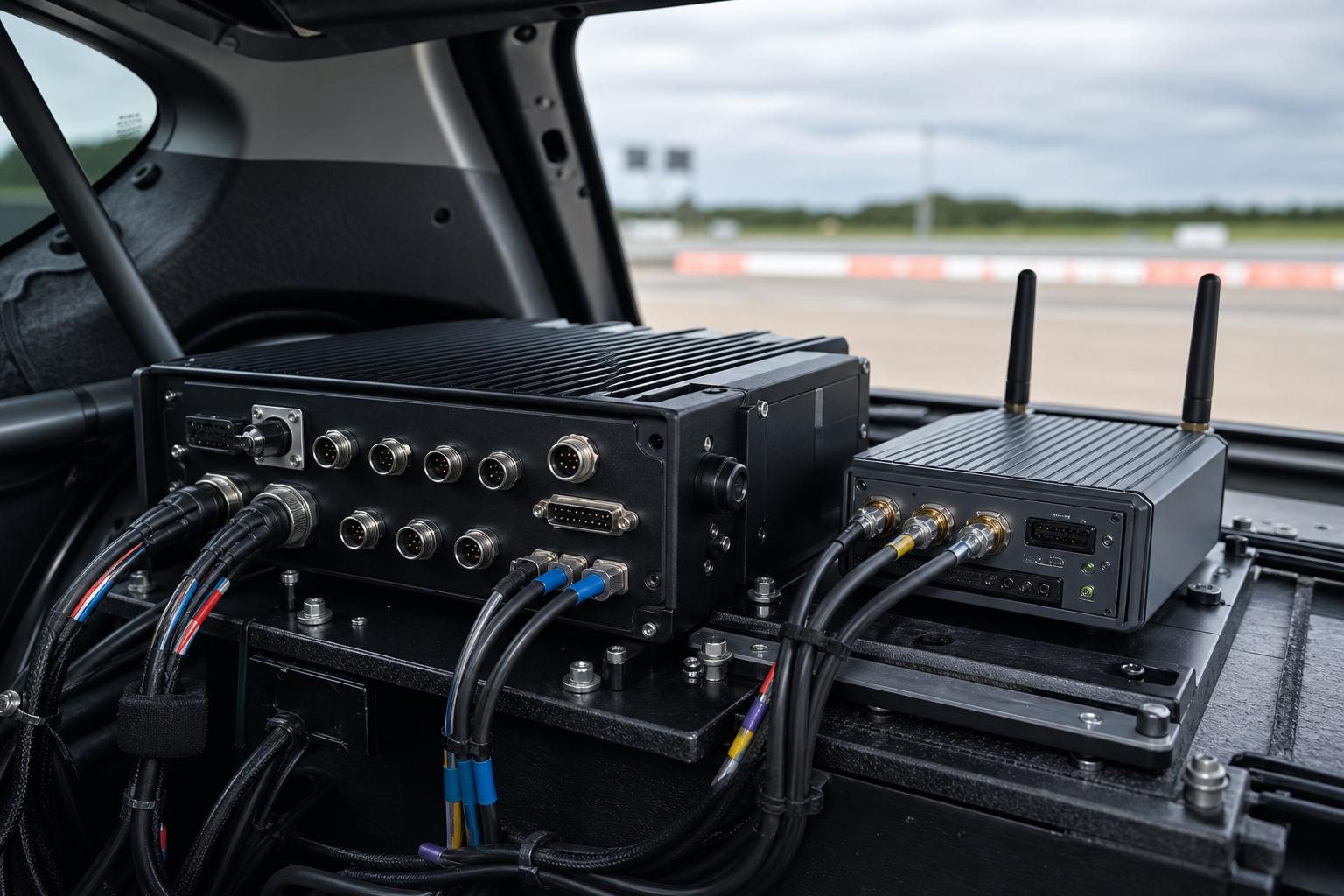
Benefits
Capture reliable data for vehicle performance monitoring and validation.
Support ADAS, braking, traction, and active safety development.
Improve fuel efficiency, emissions control, and powertrain optimization.
Provide accurate data for testing, durability studies, and predictive maintenance.
Speed Sensors
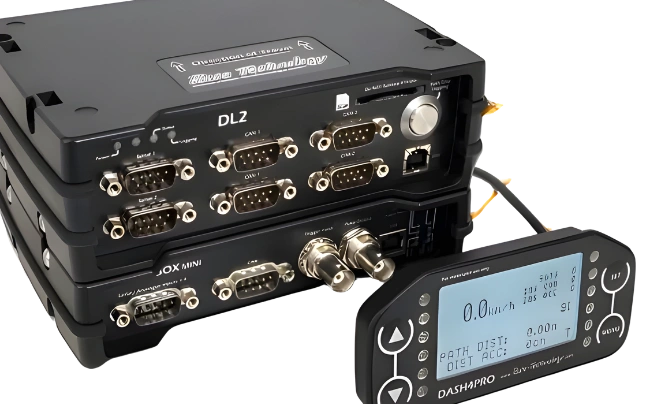
Speed sensors measure wheel speed, vehicle velocity, and rotational movement with high precision. They are essential for braking validation, traction control, vehicle dynamics, and motorsport testing.
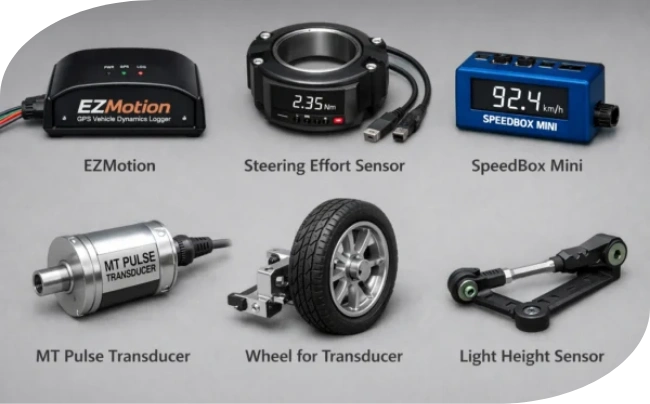
Speedbox and Speedbox Mini are non-contact GPS and inertial speed sensors for professional automotive testing, with CAN, RS232, and pulse outputs. MT Pulse Transducer provides robust rim-mounted wheel speed measurement for slip, acceleration, and ABS testing.
Motion and Position
EZMotion is designed for precise vehicle motion and position measurement during track testing, simulation, data collection, and real-time control.
Force and Load Measurement
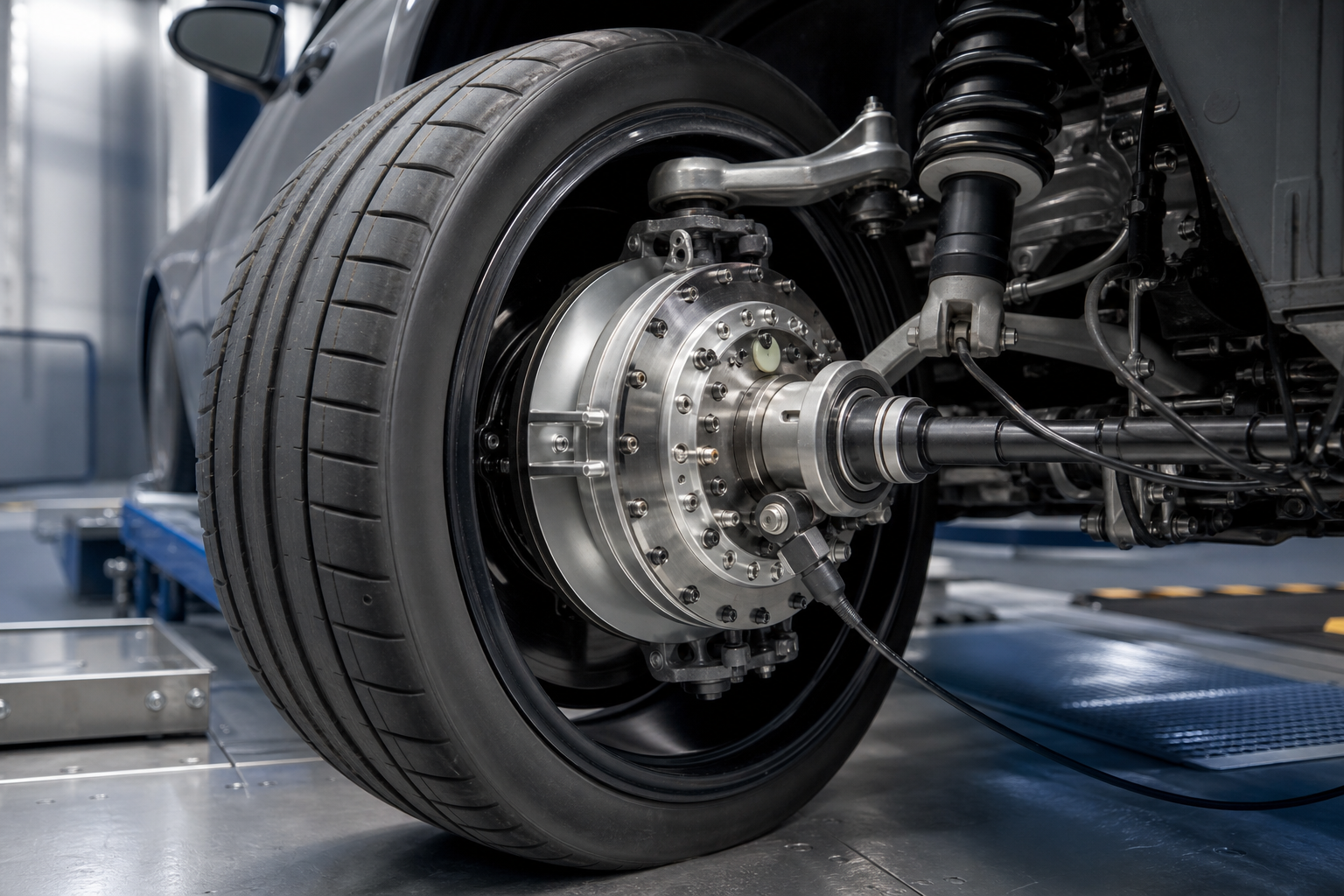
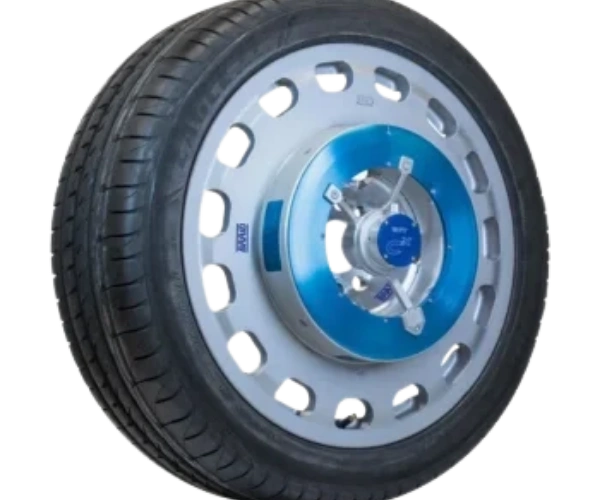
Wheel Force Transducers (WFT-Cx) measure all six force and torque components acting on a wheel. Their robust all-weather design supports dirt, water, snow, load collective acquisition, fatigue testing, and winter function trials.
Available for small cars and lighter vehicle variants, these high-end vehicle sensors are essential for prototype development, durability validation, and vehicle dynamics studies.
Steering and ADAS
The CLSx Steering Effort Sensor provides high-precision torque, steering angle, velocity, and acceleration measurement. Its 24-bit resolution supports dependable ADAS and autonomous-driving validation.
The LHT Light Height Sensor provides non-contact distance, pitch, roll, and dynamic camber measurement through triangulation, with CAN and analogue outputs for vehicle dynamics testing.
Applications
Acquire real-world load data during test drives.
Support test stands, road tests, and multi-poster rigs.
Use waterproof sensors for winter and harsh-weather testing.
Measure steering, motion, force, and vehicle response precisely.
Optimize performance with high-frequency wheel and engine measurement.
Modern Mobility
Modern vehicle sensors enable ABS, ESC, collision avoidance, lane-keeping assistance, emissions optimization, adaptive suspension, climate control, and driver monitoring. With the growth of electric vehicles and autonomous driving, accurate automotive sensors are increasingly important for safe, efficient, and high-performance vehicle development.
Support
Common vehicle sensors include speed sensors, wheel force sensors, steering sensors, temperature sensors, pressure sensors, and motion sensors.
Modern cars typically use 70 to 100 or more sensors, depending on the model and safety features.
They monitor vehicle performance and send data to the ECU for real-time safety, control, diagnostics, and efficiency functions.
ATSIPL Group provides professional-grade vehicle sensors including EZMotion, Speedbox, MT Pulse Transducers, and Wheel Force Transducers for R&D and testing.
Yes. Wheel force sensors provide force and torque data required for vehicle dynamics, durability, and safety-system validation.